Everything you read on screen or on a wall while playing: the weapon prompt and the base-capture banner with the wall stencil behind it, squad alerts and the vehicle dashboard, and the match-end victory and Итоги (Results) screens. Tap the button to hear it.
0.90x
Weapon Prompt & Objective Alert
Weapon Prompt & Objective Alert
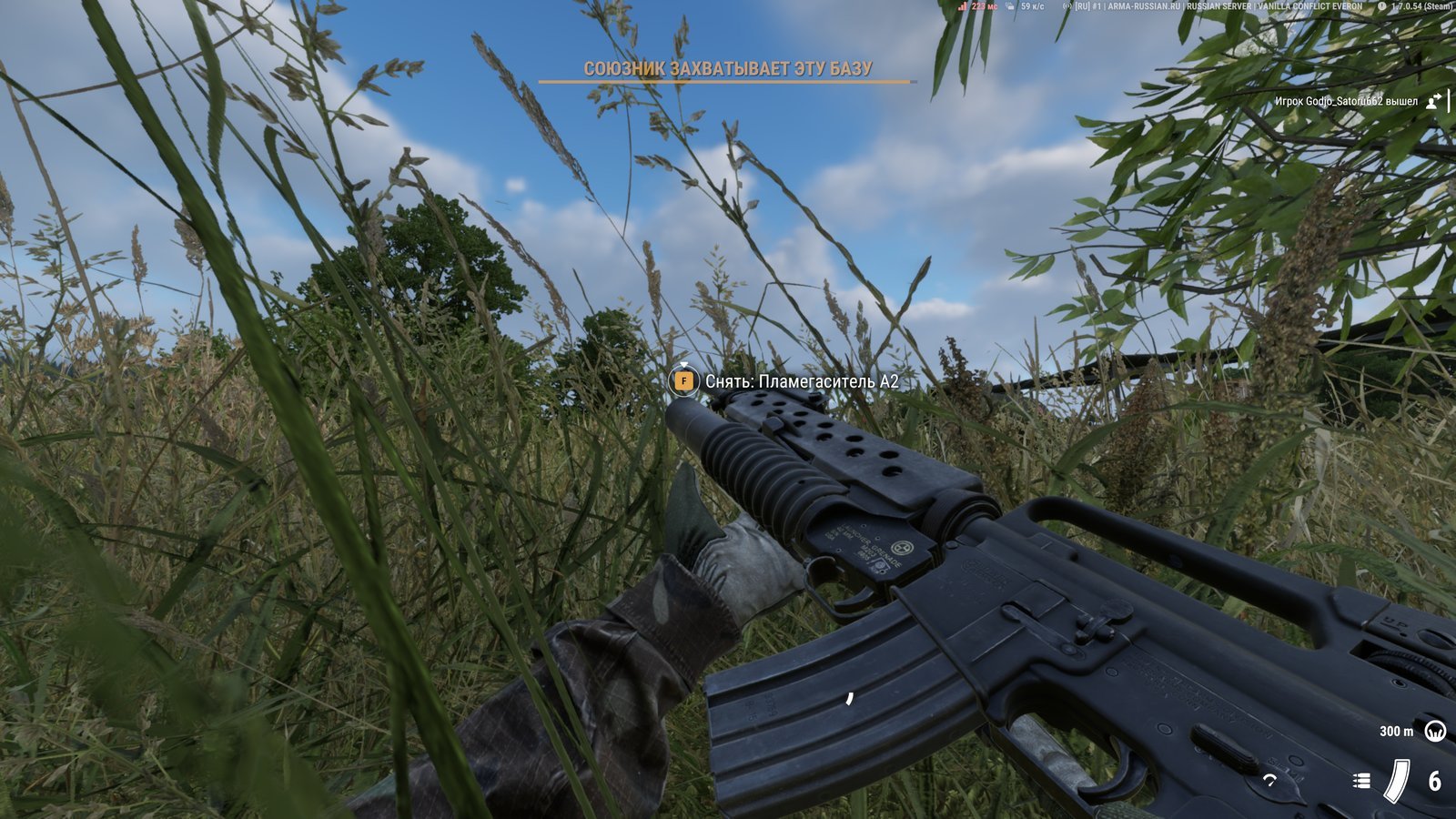
Снять: Пламегаси́тель
Remove: Flash Suppressor (F-key prompt to detach a weapon attachment; the A2 model shown on screen is a real-world weapon variant name, not Russian vocabulary)
снять · Infinitive (pf., "to take off/remove").
NOMПламегаси́тель · Dictionary пламегаси́тель (masc., literally "flame-extinguisher"); Named as a label after the colon, the game's "Action: Item" menu format.
Сою́зникзахва́тываетэ́туба́зу.
Ally is capturing this base. (top-of-screen objective banner)
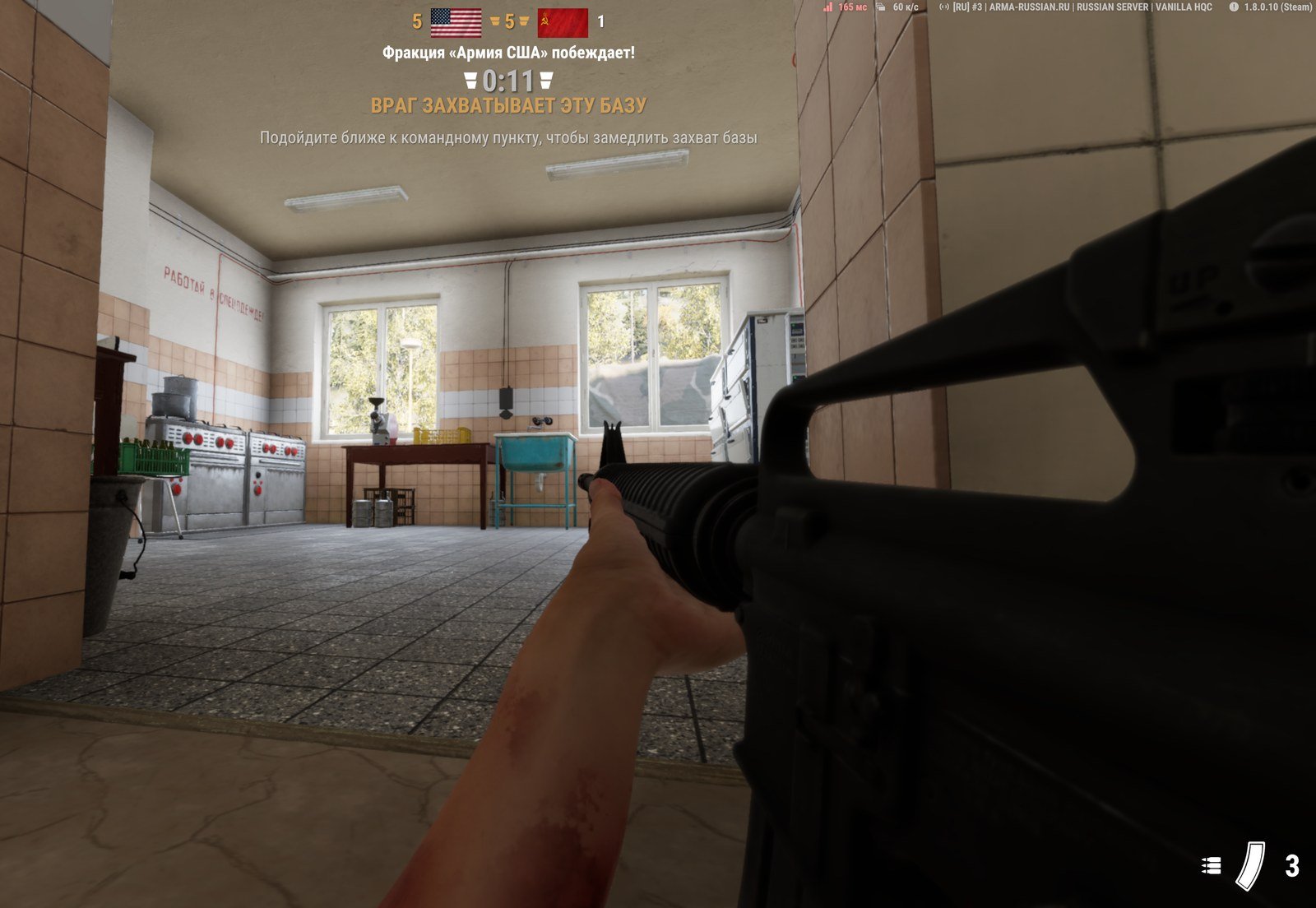
побежда́ет · 3rd-person singular present of побежда́ть (impf., "to be winning"); Imperfective, so the win is still in progress. The perfective победи́ть would mean the match was already decided.
А́рмия США · The faction's own name, kept nominative inside the quotation marks as an appositive rather than declining with Фра́кция; США is an indeclinable abbreviation (Соединённые Шта́ты Аме́рики), so it never changes form, and it is read out letter by letter as "сэ-шэ-А."
Russian uses angle quotes «...» where English uses "...". They are the standard printed and on-screen quotation marks.
Врагзахва́тываетэ́туба́зу.
The enemy is capturing this base. (objective alert, printed in caps on screen)
захва́тывает · 3rd-person singular present of захва́тывать (impf., "to capture/seize"); Imperfective for an action still under way, which is exactly why a countdown is running beside it.
ACCба́зу · Dictionary ба́за (fem., "base"), accusative singular; Direct object of захва́тывает.
ACCэ́ту ("this") · Agrees with ба́зу, accusative feminine.
This is the enemy version of the banner. Swap Враг for Сою́зник ("ally") and the rest of the sentence is identical.
Подойди́те бли́же к кома́ндномупу́нкту, что́бы заме́длитьзахва́тба́зы.
Move closer to the command post to slow the base capture. (instruction line under the alert)
Подойди́те · Вы-imperative of подойти́ (pf., "to approach/come up to"); Formal plural, the register the game uses for every instruction it gives the player.
бли́же · Comparative of бли́зко ("close"), so "closer."
DATпу́нкту · Dictionary пункт (masc., "point/post"), dative singular; Подойти́ к ("approach") takes the dative.
DATкома́ндному ("command") · Agrees with пу́нкту, dative masculine.
заме́длить · Infinitive (pf., "to slow down"), governed by что́бы ("in order to"), which takes an infinitive when the subject does not change.
ACCзахва́т · Dictionary захва́т (masc., "capture/seizure"), accusative singular; Direct object of заме́длить.
GENба́зы · Dictionary ба́за (fem., "base"), genitive singular; Modifies захва́т, the "capture of the base."
Кома́ндный пункт, often abbreviated КП in speech and on maps, is the standard Russian military term for a command post.
Wall Signage
Рабо́тай в спецоде́жде!
Work in protective clothing! (safety stencil painted on the kitchen wall behind)
Рабо́тай · Ты-imperative of рабо́тать (impf., "to work"); Singular and informal, the register Soviet safety signage used to address the individual worker directly.
PREPспецоде́жде · Dictionary спецоде́жда (fem., "protective/work clothing"), prepositional singular; В takes the prepositional for what someone is dressed in.
Спецоде́жда is a clipped compound of специа́льная оде́жда ("special clothing"), formed the same way as спецна́з; Stencilled safety slogans like this one were a fixture of Soviet industrial interiors, and Arma Reforger paints them on as period set dressing.
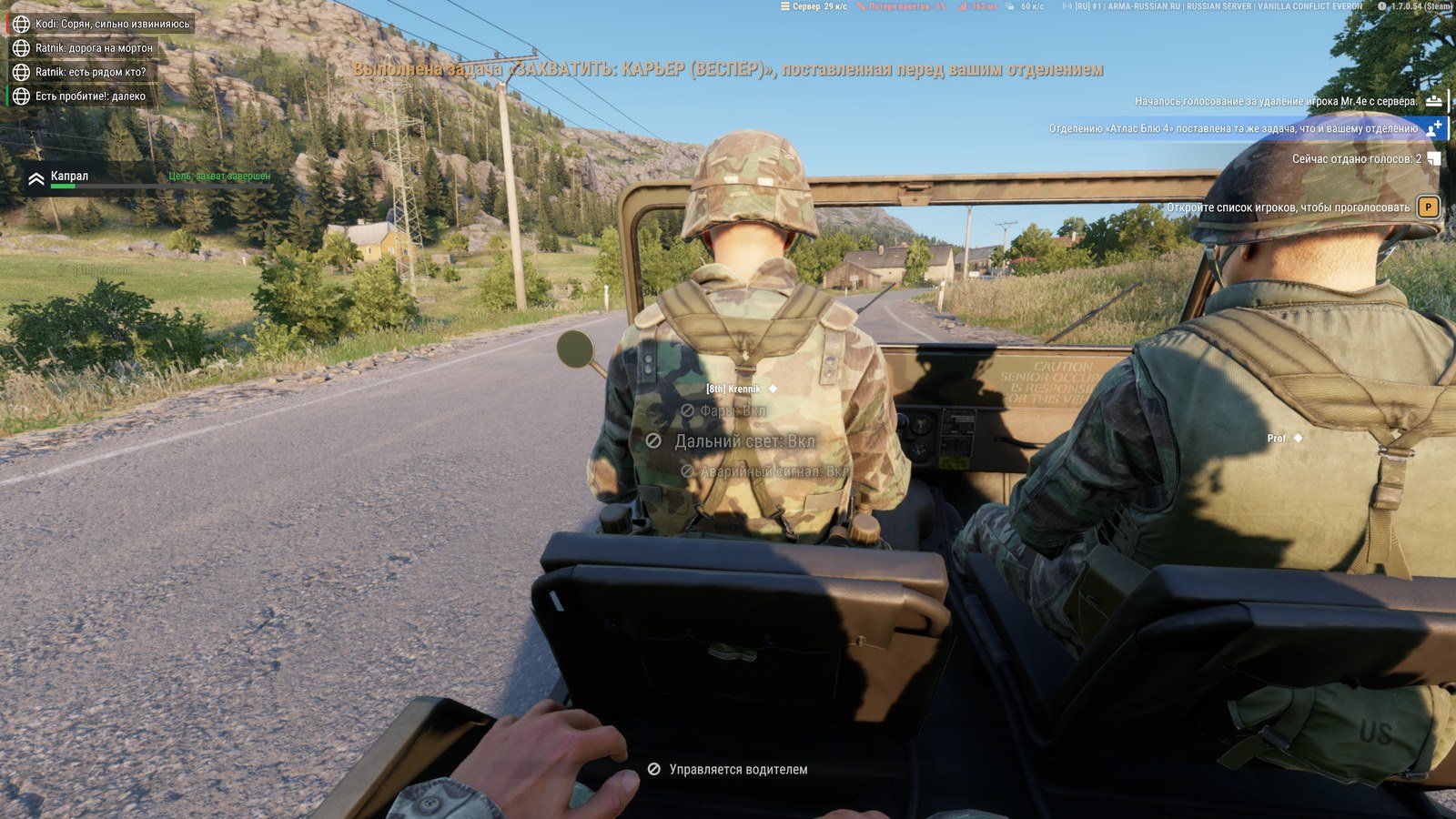
NOMсвет · Dictionary свет (masc., "light"); Head noun, nominative (dashboard status label).
NOMда́льний ("far/distant") · Agrees with свет, nominative masc.
Together "да́льний свет" is the standard term for high beams.
Авари́йныйсигна́л
Hazard Signal (dashboard status label)
NOMсигна́л · Dictionary сигна́л (masc., "signal"); Head noun, nominative (dashboard status label).
NOMавари́йный ("emergency/hazard") · Agrees with сигна́л, nominative masc.
Управля́етсяводи́телем
Controlled by the driver (interaction prompt shown when a vehicle control is already being operated by the driver)
управля́ется · 3rd person sing. present passive of управля́ть(ся) ("to be controlled/operated").
INSводи́телем · Dictionary води́тель (masc.); Instrumental marking the agent of a passive construction ("by the driver").
Match End
Match End
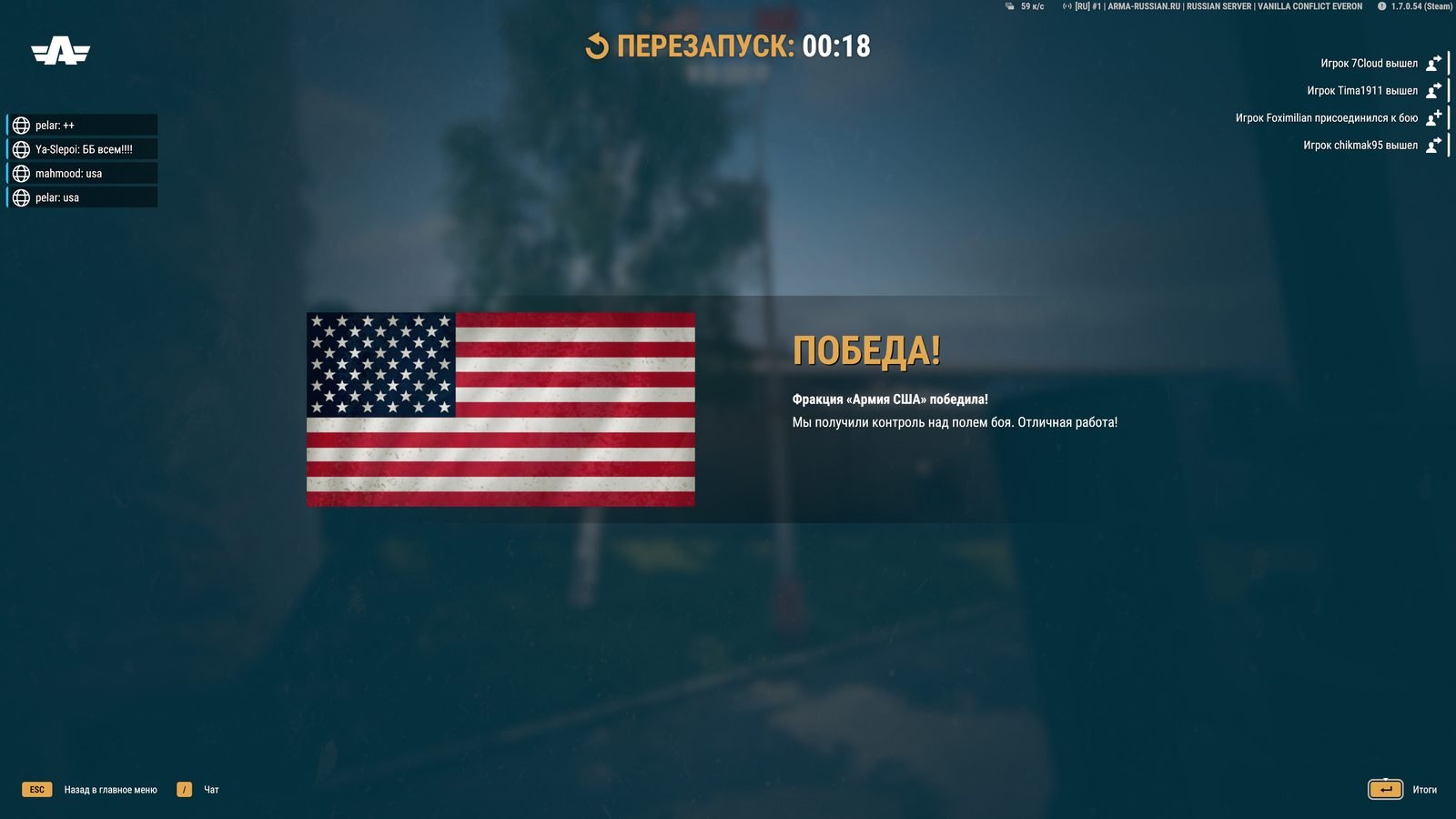
Побе́да!
Victory!
Фра́кция «А́рмия США́» победи́ла!
The "US Army" faction has won! (faction name changes with the match)
победи́ла · Past tense fem. of победи́ть (pf., "to win"), agreeing with Фра́кция; the final-result counterpart of побежда́ет on the Base Capture tab.
Мы получи́ликонтро́ль над по́лембо́я. Отли́чнаярабо́та!
We gained control of the battlefield. Great job!
The defeat message under the Итоги screen below is this same sentence with Враг ("the enemy") as its subject; Отли́чная рабо́та ("great job") is a nominative exclamation, no verb.
Перезапу́ск
Restart
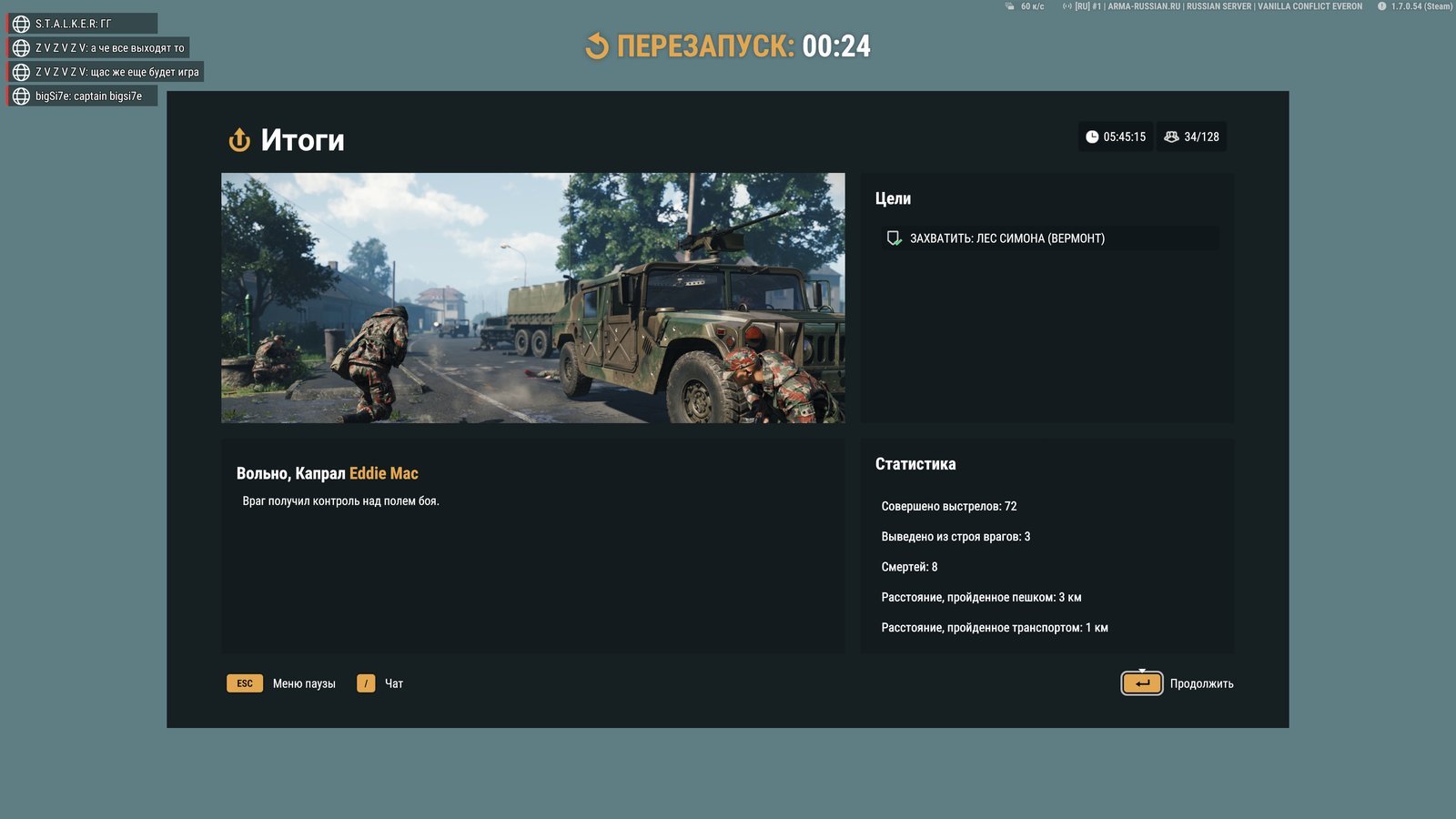
Ито́ги
Results / Summary
Наза́д в гла́вноеменю́
Back to Main Menu
ACCменю́ · Indeclinable neuter noun ("menu"), unchanged in every case; Object of "в" for motion into, accusative.
ACCгла́вное ("main") · Agrees with меню́, accusative neut.
Чат
Chat
Итоги Screen
Result & Objective
Це́ли
Objectives
Захвати́ть
Capture (objective-list verb, followed by a place name on screen)
захвати́ть · Infinitive (pf., "to capture"); On the objective list it's followed by a place name in the accusative, the game's own screenshot term for that location.
Врагполучи́лконтро́ль над по́лембо́я.
The enemy gained control of the battlefield. (defeat message; the win version, "Мы получили контроль над полем боя," is under the victory screen above)
NOMВраг · Dictionary враг (masc., "enemy"); Subject of получи́л.
получи́л · Past tense masc. of получи́ть (pf., "to receive/gain").
ACCконтро́ль · Dictionary контро́ль (masc.); Direct object of получи́л, accusative (inanimate, same as nominative).
GENбо́я · Dictionary бой (masc., "battle"); Modifies по́лем; together "по́ле бо́я" ("field of battle") means battlefield.
Во́льно
At Ease / Stand Down (spoken to your character by rank and name, e.g. "Во́льно, Капра́л ...")
Во́льно is a military command adverb ("at ease"), historically paired with a rank + name address, as in "Во́льно, Капра́л ..."; it's an adverb, not a case-marked noun.
Statistics & Controls
Стати́стика
Statistics
Совершено́вы́стрелов
Shots Fired
совершено́ · Short-form neuter passive participle of соверши́ть (pf., "to carry out/perform"); Used impersonally ("[this many] were made").
GENвы́стрелов · Dictionary вы́стрел (masc.), genitive plural; The counted noun in this stat (a number normally precedes it on screen, e.g. "Совершено́ 42 вы́стрела").
Вы́ведено из стро́явраго́в
Enemies Neutralized
вы́ведено · Short-form neuter passive participle of вы́вести (pf., "to lead/bring out"); Used impersonally.
GENстро́я · Dictionary строй (masc., "formation"), genitive; "Из стро́я" ("out of action/formation") is a fixed idiom, object of "из."
GENвраго́в · Dictionary враг (masc.), genitive plural; The counted noun for this stat.
Смерте́й
Deaths
GENСмерте́й · Dictionary смерть (fem.), genitive plural; This stat label already appears in the counted genitive-plural form used after a number (e.g. "3 смерте́й"), not the nominative смерти.
NOMпро́йденное · Past passive participle of пройти́ (pf., "to cover/traverse"); Neuter to agree with расстоя́ние: "distance traveled."
Пешко́м ("on foot") is a frozen adverb, historically an instrumental form, no longer treated as a case-marked noun in modern usage.
Расстоя́ние, про́йденноетра́нспортом
Distance Traveled by Vehicle
Расстоя́ние, про́йденное · Same "distance traveled" construction as the entry above.
INSтра́нспортом · Dictionary тра́нспорт (masc.); Instrumental expressing the means of travel ("by vehicle"), a genuine live instrumental, unlike the frozen adverb пешко́м above.
Меню́па́узы
Pause Menu
NOMМеню́ · Indeclinable neuter noun ("menu"), unchanged in every case; Head noun, nominative here.
GENпа́узы · Dictionary па́уза (fem.), genitive; Modifies Меню́ ("menu of the pause").