The map screen and what it shows: the weather report, the Conflict-mode briefing and its menu, server and battle alerts with the places they name, map geography terms, and the Place Military Marker dialog with every unit type, in Russian, for quick lookup while playing. Tap the button to hear it.
0.90x
Map & Weather Controls
Map & Weather Controls
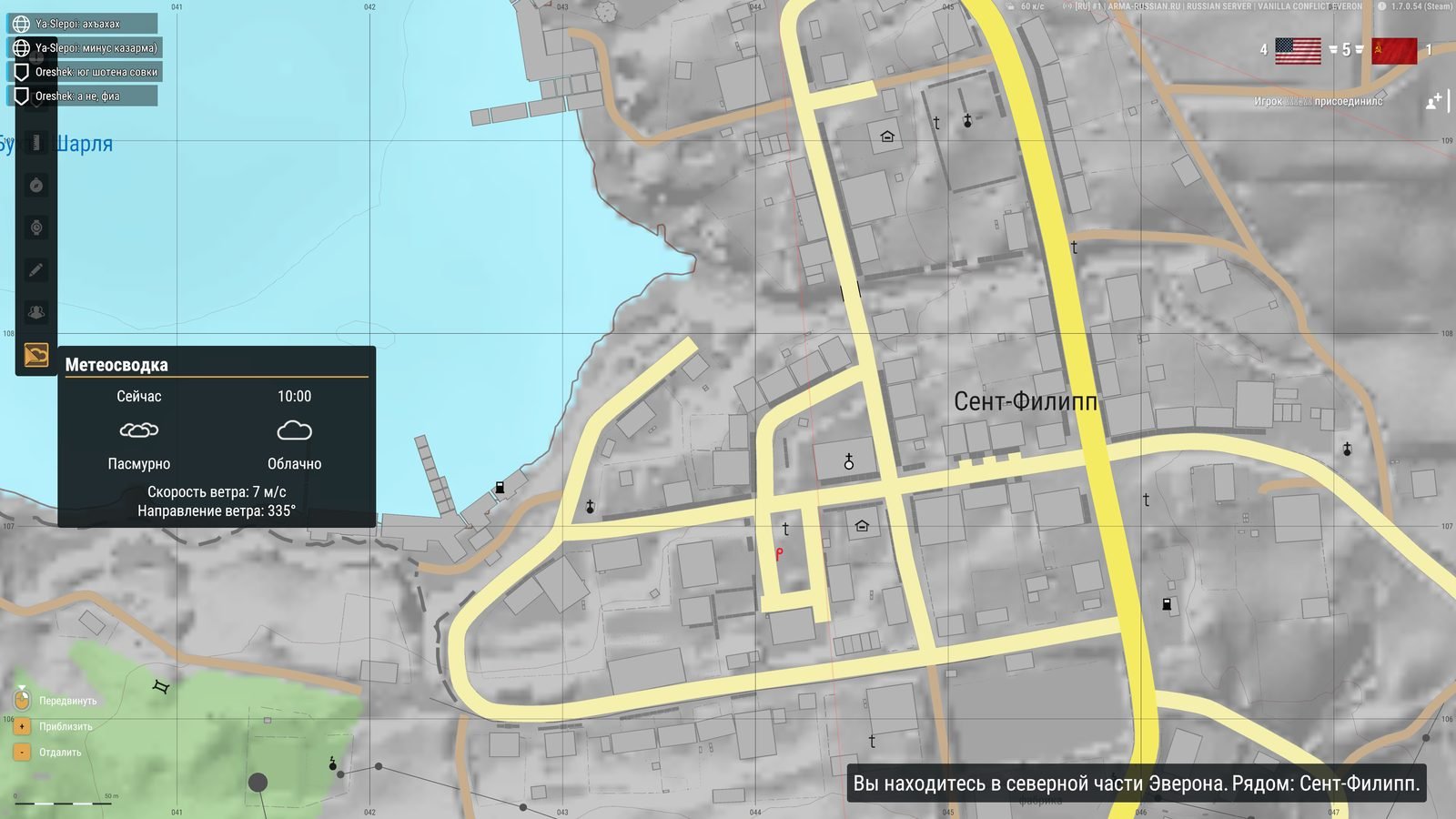
Метеосво́дка
Weather Report
NOMМетеосво́дка · Dictionary метеосво́дка (fem.), a compound of ме́тео- ("weather-") + сво́дка ("report/summary").
Па́смурно
Overcast
Па́смурно ("overcast") is a predicative adverb describing weather, not a case-marked noun, like English "it's overcast."
О́блачно
Cloudy
О́блачно ("cloudy") is the same kind of predicative weather adverb as Па́смурно above.
Ско́ростьве́тра
Wind Speed
NOMСко́рость · Dictionary ско́рость (fem., "speed"); Head noun.
GENве́тра · Dictionary ве́тер (masc., "wind"), genitive; Modifies Ско́рость ("speed of the wind").
Направле́ниеве́тра
Wind Direction
Same "X ве́тра" construction as Ско́рость ве́тра above; Направле́ние (neut., "direction") is the head noun here instead.
Передви́нуть
Move (Map)
передви́нуть · Infinitive (pf., "to move/shift (something)"), used bare as the map-drag control label.
Прибли́зить
Zoom In
прибли́зить · Infinitive (pf., "to bring closer"), the zoom-in control label.
Отдали́ть
Zoom Out
отдали́ть · Infinitive (pf., "to move further away"), the zoom-out control label.
Briefing Text (Full Passages)
Briefing Menu
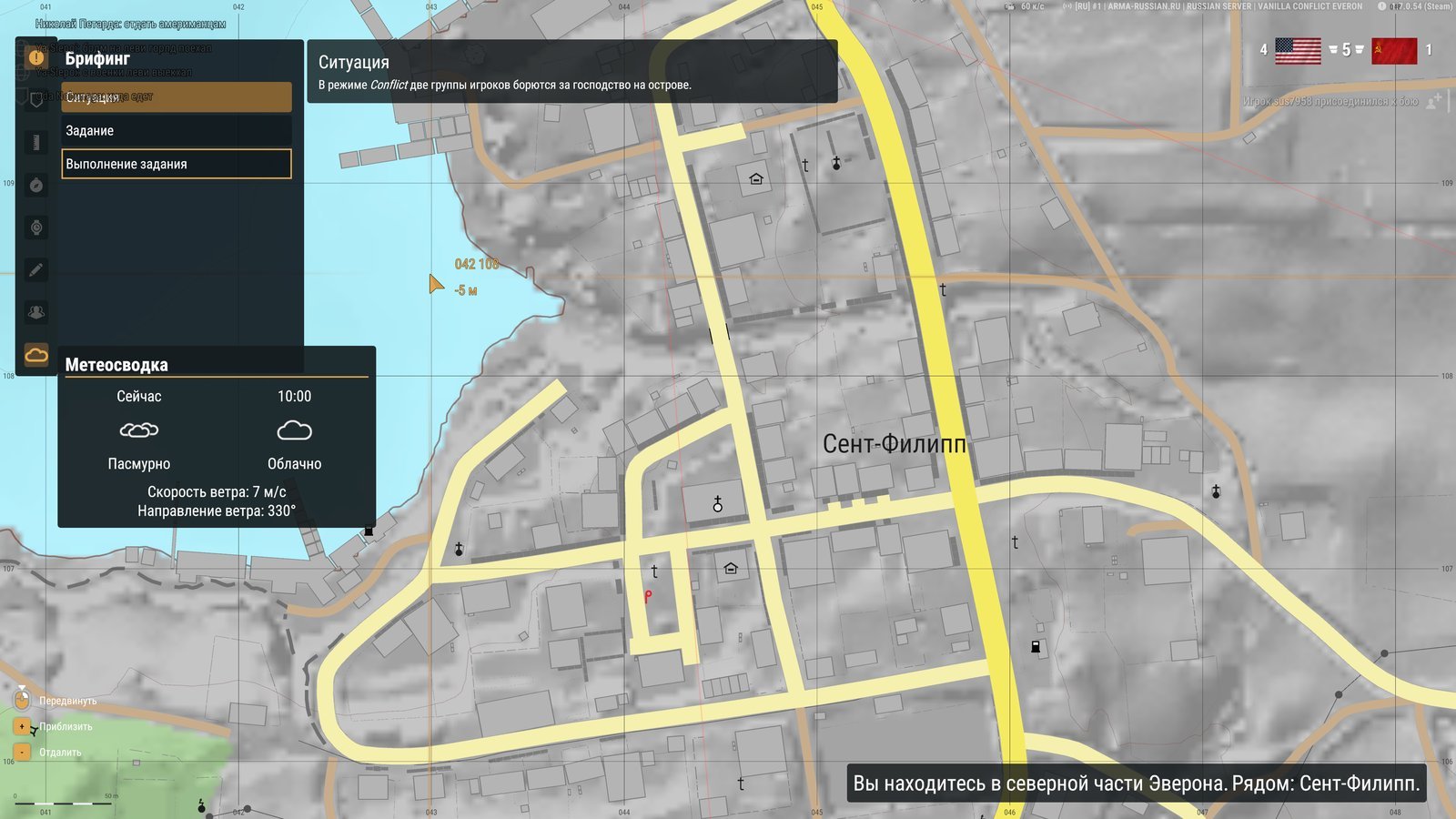
Бри́финг
Briefing
NOMБри́финг · Dictionary бри́финг (masc.), a borrowed word from English "briefing."
Ситуа́ция
Situation
Зада́ние
Task / Objective
Выполне́ниезада́ния
Task Progress
NOMВыполне́ние · Dictionary выполне́ние (neut., "completion/execution"); Head noun.
GENзада́ния · Genitive of зада́ние; Modifies Выполне́ние ("completion of the task").
Briefing Text (Full Passages)
В режи́ме Conflict две гру́ппыигроко́вбо́рются за госпо́дство на о́строве.
In Conflict mode, two groups of players fight for dominance on the island. (Situation tab)
PREPо́строве · Dictionary о́стров (masc.), prepositional; "На" for location.
Для побе́ды одна́ сторона́ должна́ захвати́ть определённое коли́чество стратеги́ческих пози́ций и уде́рживать их в тече́ние за́данного вре́мени. Э́ти пози́ции должны́ находи́ться в зо́не де́йствия радиосигна́ла ва́шей фра́кции, ина́че их нельзя́ бу́дет до́лжным о́бразом защити́ть. Чем бо́льше вое́нных объе́ктов и средств свя́зи вы захва́тите, тем бо́льше бу́дет ва́ша сфе́ра операти́вного влия́ния.
To win, one side must capture a set number of strategic positions and hold them for a set time. These positions must be within your faction's radio-signal range, or they can't be properly defended. The more military objects and communication assets you capture, the larger your sphere of operational influence. (Task tab)
ACCколи́чество · Dictionary коли́чество (neut., "quantity/number"); Direct object of захвати́ть, accusative.
GENпози́ций · Dictionary пози́ция (fem.), genitive plural; The counted noun after коли́чество ("a number of positions").
"В тече́ние" (during/over the course of) is a fixed prepositional phrase that always takes genitive, here за́данного вре́мени ("the allotted time").
PREPзо́не · Dictionary зо́на (fem.), prepositional; "В" for location.
"Чем бо́льше..., тем бо́льше..." ("the more..., the more...") is a fixed correlative construction for proportional relationships.
Что́бы вы́игратьсраже́ние, ва́ша сторона́ должна́ захвати́ть и уде́рживать не́сколько ключевы́х то́чек. Учти́те, что ба́зы мо́жно захва́тывать то́лько в диапазо́не радиосигна́лов фра́кции; э́тот диапазо́н отобража́ется на ка́рте.
To win the battle, your side must capture and hold several key points. Bases can only be captured within your faction's radio range; that range is shown on the map. (Task Progress tab, part 1)
"Что́бы" + infinitive (вы́играть) expresses purpose, "in order to win."
ACCсраже́ние · Dictionary сраже́ние (neut., "battle"); Direct object of вы́играть, accusative.
GENто́чек · Dictionary то́чка (fem.), genitive plural; Counted by "не́сколько" ("several"), which always takes genitive.
NOMба́зы · Dictionary ба́за (fem.), nominative plural; Subject of the impersonal мо́жно захва́тывать construction.
PREPдиапазо́не · Dictionary диапазо́н (masc.), prepositional; "В" for location.
PREPка́рте · Dictionary ка́рта (fem.), prepositional; "На" for location.
Что́бы получи́тьтра́нспорт для перево́зки, запроси́те его́ на автоба́зе. Её мо́жно постро́ить на ва́шей ба́зе.
To get transport for hauling, request it at the motor pool. It can be built on your base. (Task Progress tab, part 2)
ACCтра́нспорт · Dictionary тра́нспорт (masc.); Direct object of получи́ть, accusative.
GENперево́зки · Dictionary перево́зка (fem., "hauling/transport"), genitive; Object of "для" (for), which always takes genitive.
запроси́те · Вы/plural imperative of запроси́ть (pf., "to request").
постро́ить · Infinitive (pf., "to build"), governed by мо́жно ("can/it is possible to").
Грузовики́ мо́жно испо́льзовать та́кже для загру́зки и разгру́зки ва́жных материа́лов на скла́дах снабже́ния в це́лях постро́йки дополни́тельных сооруже́ний. Что́бы нача́тьстрои́тельство, взаимоде́йствуйте с вы́веской пе́ред пала́ткой кома́ндования.
Trucks can also load and unload important materials at supply depots for building extra structures. To start building, interact with the sign in front of the command tent. (Task Progress tab, part 3)
ACCГрузовики́ · Dictionary грузови́к (masc.), accusative plural ("trucks"), the same as the nominative for an inanimate noun; Object of испо́льзовать: мо́жно has no subject.
PREPскла́дах · Dictionary склад (masc.), prepositional plural; "На" for location.
"В це́лях" ("for the purpose of") is a fixed prepositional phrase, always followed by genitive (here постро́йки, "construction").
ACCстрои́тельство · Dictionary строи́тельство (neut., "construction"); Direct object of нача́ть, accusative.
взаимоде́йствуйте · Вы/plural imperative of взаимоде́йствовать (impf., "to interact"), pairs with "с" + instrumental.
GENподключе́ния · Dictionary подключе́ние (neut., "connection"), genitive; Modifies ожида́ния in turn ("waiting for connection").
Зада́чавы́полнена.
Task completed.
вы́полнена · Short-form passive participle fem. of вы́полнить (pf., "to complete"), agreeing with Зада́ча.
Ба́заатако́вана.
Base attacked.
Берегова́яба́за
Coastal Base
NOMберегова́я ("coastal") · Agrees with ба́за, nominative fem.
То́чка
Point (Capture Point)
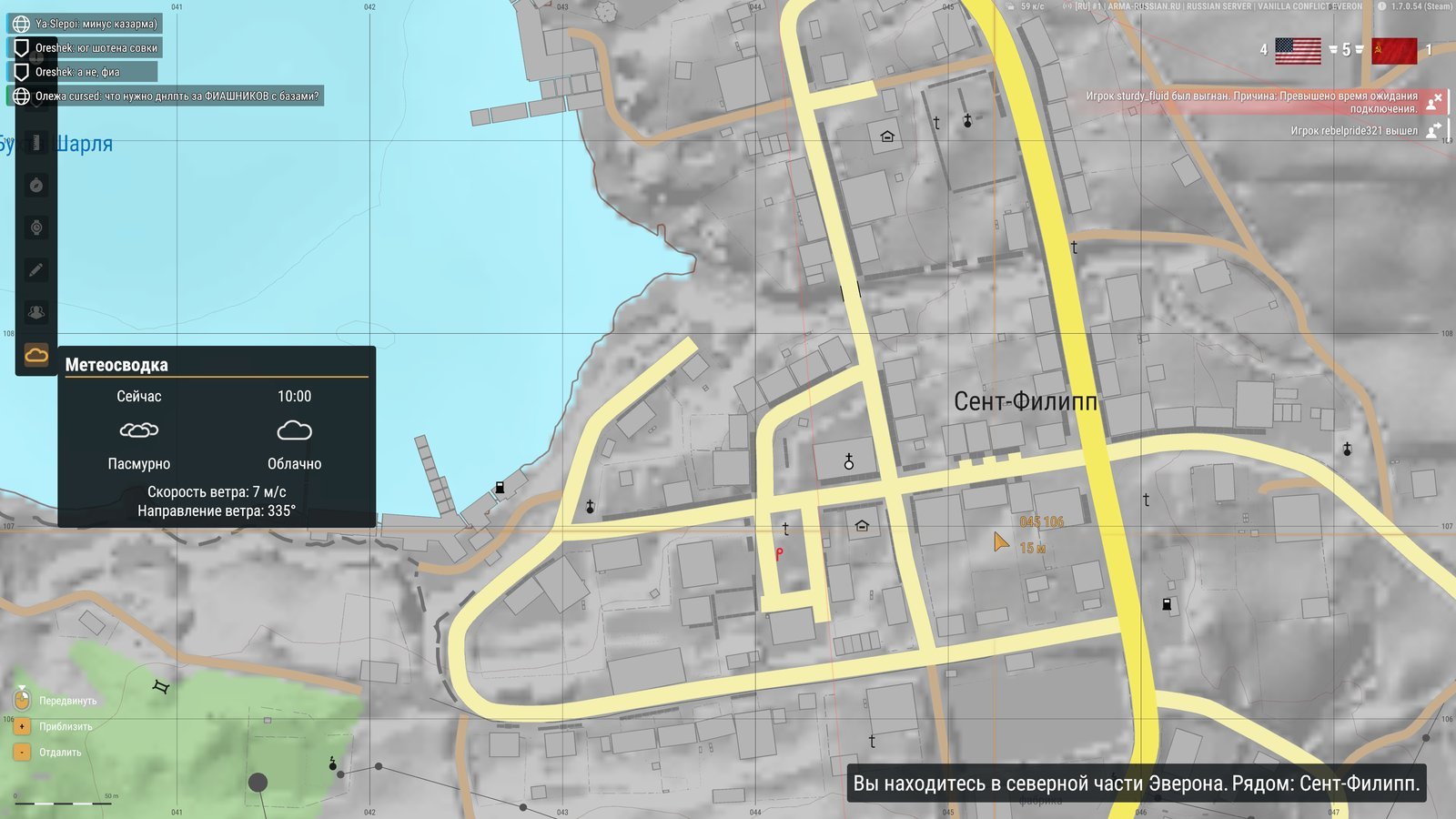
Вы нахо́дитесь в се́вернойча́сти Э́верона. Ря́дом: Сент-Фили́пп.
You are in the northern part of Everon. Nearby: Saint-Philippe. (location status bar; place names change with your position)
нахо́дитесь · 2nd person plural/formal of находи́ться (impf., "to be located").
PREPча́сти · Dictionary часть (fem., "part"), prepositional; "В" for location.
PREPсе́верной ("northern") · Agrees with ча́сти, prepositional fem.
Э́верона (genitive of Э́верон) modifies ча́сти ("part of Everon"); Сент-Фили́пп is a place name, both left uncolored like proper names.
Navigating by the Coast
Coastal Landmarks
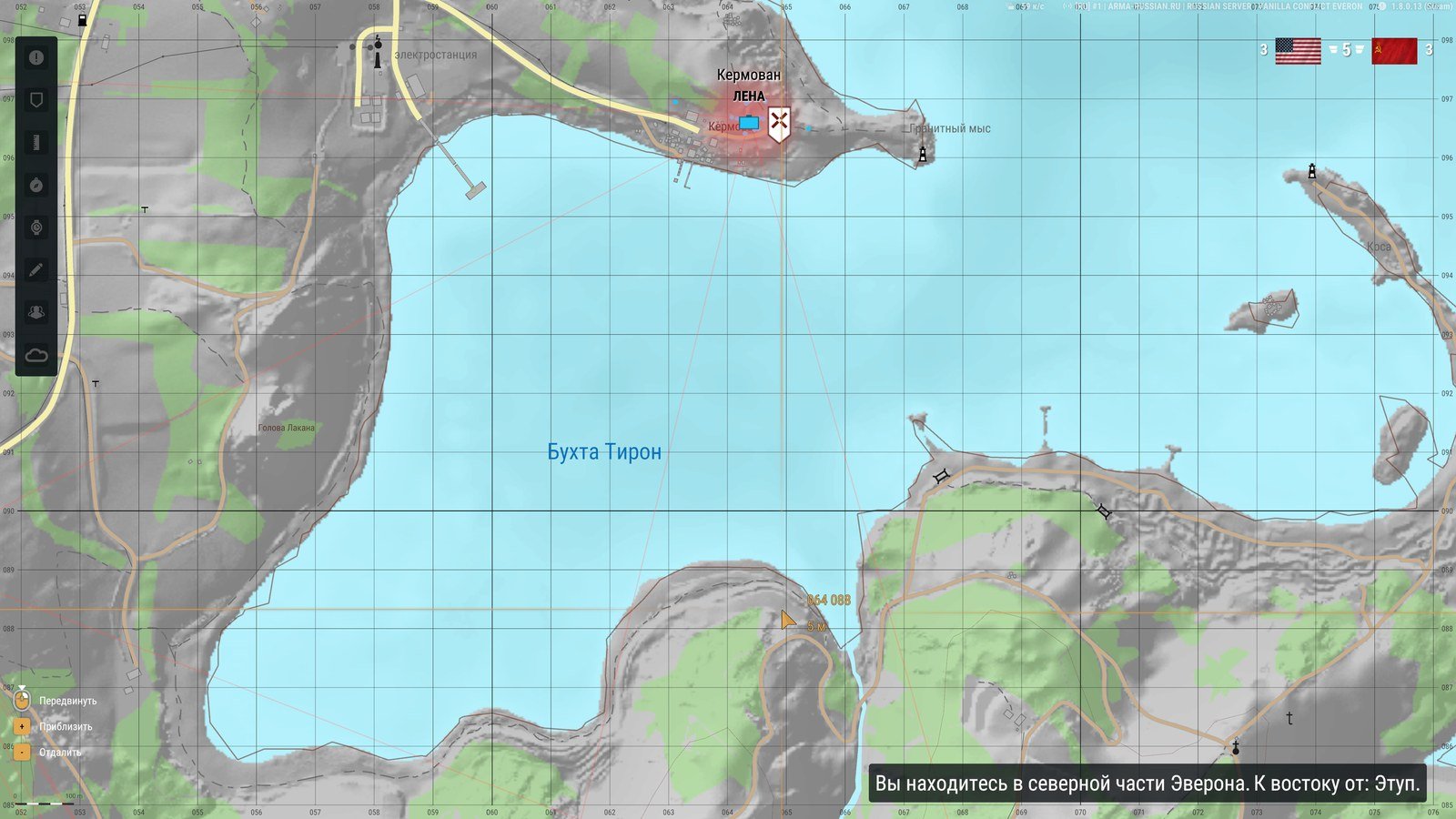
Грани́тныймыс
Granite Cape (a headland on the north coast)
NOMмыс · Dictionary мыс (masc., "cape, headland"); Head noun, and the general word for any point of land reaching into the sea.
NOMГрани́тный ("granite") · Agrees with мыс, nominative masc.; from грани́т.
A cape is the most useful thing on this map from the air: it is visible from far out, it does not move, and it is what a pilot lines up on when the coast otherwise looks the same in every direction.
A homonym worth knowing: the same spelling and stress also mean a braid of hair, and a scythe. Context does all the work, and on a map it is always the landform.
Электроста́нция
Power station (labelled west of Кермован)
NOMЭлектроста́нция · Dictionary электроста́нция (fem., "power station"); A closed compound of электри́ческая ста́нция, written as one word.
Compare Радиореле́йная ста́нция on the Build: Structures page, where ста́нция stays a separate noun with an adjective in front of it. Both are stations; only this one has fused.
Вы нахо́дитесь в се́вернойча́стиЭверо́на. К восто́ку от: Этю́п.
You are in the northern part of Everon. To the east of: Etoupe. (map location line)
нахо́дитесь · вы-form of находи́ться (impf., "to be located"). Reflexive, and the ordinary way Russian says where something is.
PREPча́сти · Dictionary часть (fem., "part"), prepositional; Object of "в" meaning location.
DATвосто́ку · Dictionary восто́к (masc., "east"), dative; "К ... от" is a two-part frame meaning "to the ... of": к takes the dative and от takes the genitive, so the direction word and the landmark carry different cases in one short phrase.
The Server & Battle Alerts screen above teaches the other form of this same line, which ends "Рядом:" plus the nearest settlement. This one gives a bearing instead, which is what you get when nothing is close enough to name.
Этюп is a transliterated French place name and the game gives no pronunciation guide, so its stress here is the site's reading rather than something the UI confirms.
Map Geography Terms
Го́род
City / Town
Дере́вня
Village
О́стров
Island
Мо́ре
Sea
Океа́н
Ocean
О́зеро
Lake
Гора́
Mountain
Река́
River
Лес
Forest
По́ле
Field
Доро́га
Road
Мост
Bridge
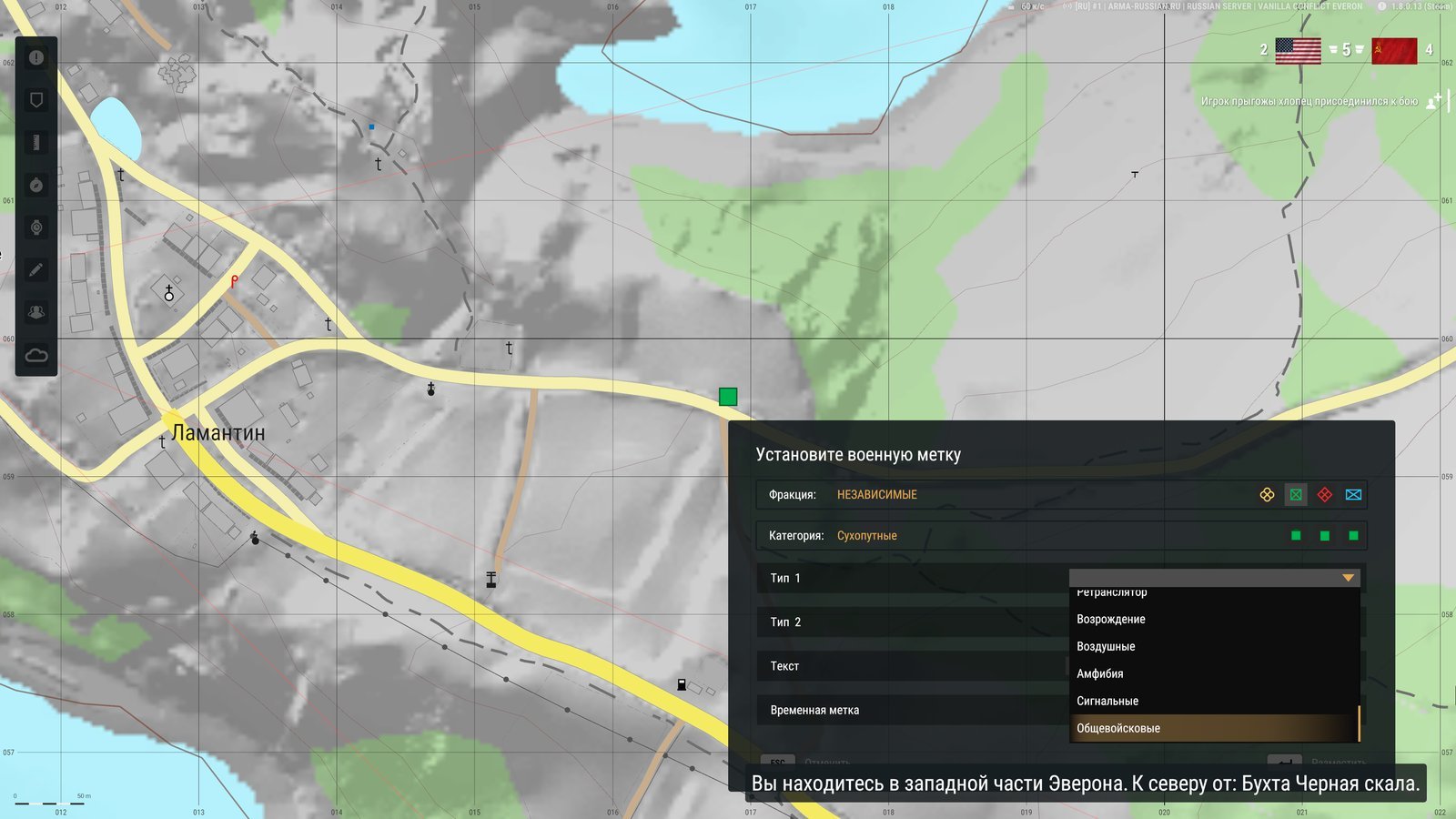
Place Military Marker Dialog
Dialog Fields & Buttons
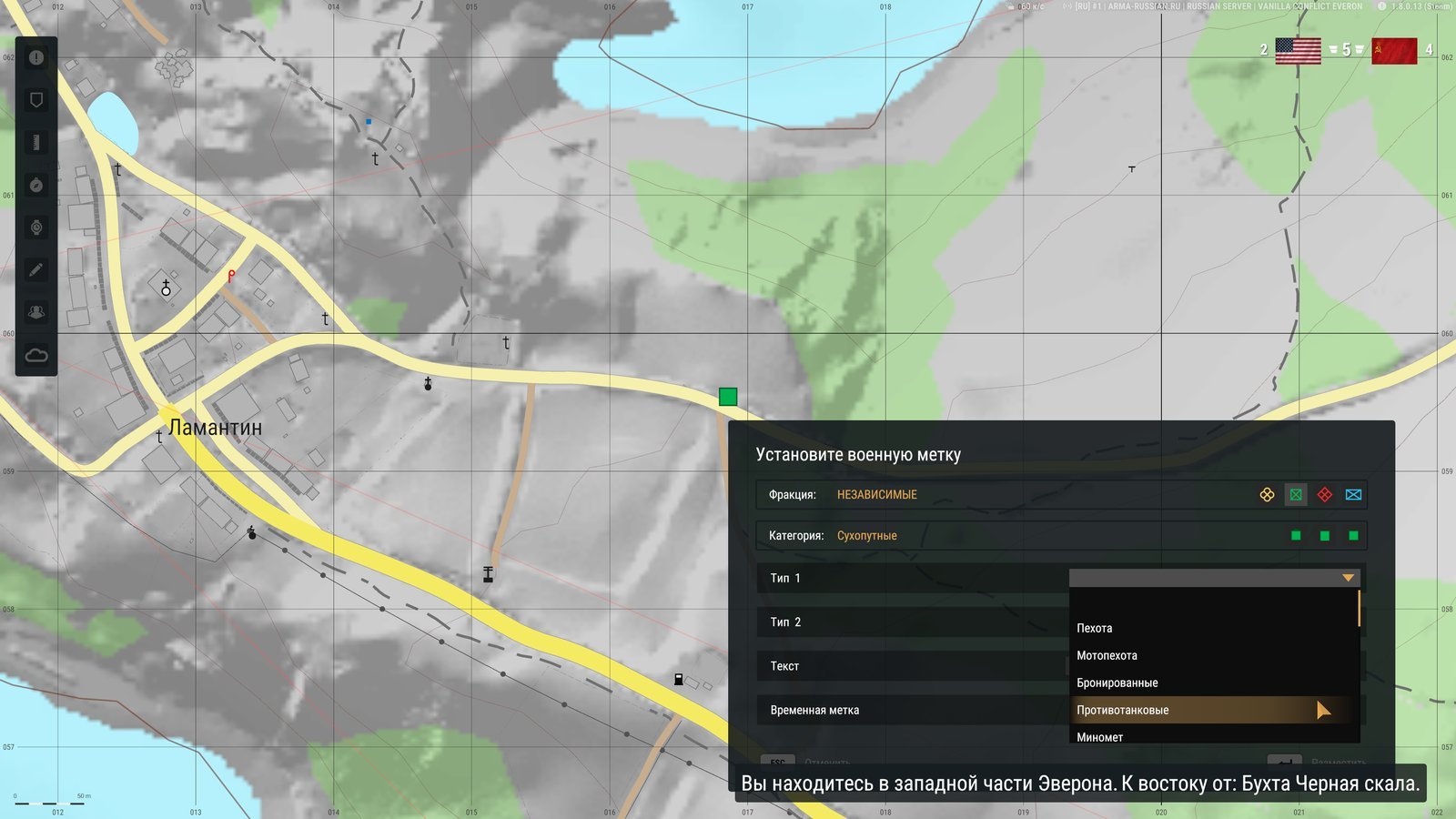
Установи́те вое́ннуюме́тку
Place a military marker (the dialog's title)
Установи́те · Вы-imperative of установи́ть (pf., "to set up, to place, to install").
ACCме́тку · Dictionary ме́тка (fem., "mark, marker, tag"); Direct object of установи́те, accusative singular.
ACCвое́нную ("military") · Agrees with ме́тку, accusative feminine singular.
The polite вы-imperative is the normal register for instructions in Russian software, even when the program is addressing one player. Ме́тка is the everyday word for a map pin, and the game uses it for its other marker kinds too, such as По́льзовательская ме́тка (Custom Marker).
Фра́кция: НЕЗАВИ́СИМЫЕ
Faction: Independent
NOMФра́кция · Dictionary фра́кция (fem., "faction"); Field label, nominative.
NOMнезави́симые ("independent") · A plural adjective used as a noun, nominative plural; The noun it describes is left unsaid, and the game's field manual pairs it with подразделе́ния, "units".
The four icons on the right of this row switch the faction. The game's other options are BLUFOR and OPFOR, NATO shorthand for friendly and enemy forces that the Russian version keeps in Latin letters, and Неизве́стно (Unknown). The game prints the selected value in capitals.
Катего́рия: Сухопу́тные
Category: Land
NOMКатего́рия · Dictionary катего́рия (fem., "category"); Field label, nominative.
NOMСухопу́тные ("land, ground") · A plural adjective used as a noun, nominative plural; The same word as in сухопу́тные войска́, "ground forces".
Сухопу́тный comes from сухо́й путь, a "dry route", meaning travel over land rather than by water. The other two categories are Возду́шные (Air) and Сооруже́ние (Installation).
Тип 1
Type 1 (the unit type, whose dropdown is on the Unit Types tab)
NOMТип · Dictionary тип (masc., "type"); Field label, nominative. One syllable, so no stress mark.
Тип 1 picks the main symbol for the marker, from the list taught on the Unit Types tab. Тип 2 is a second, optional type field underneath it.
Тип 2
Type 2 (a second, optional type field)
Текст
Text (an optional label typed onto the marker)
Временна́яме́тка
Timestamp
NOMме́тка · Dictionary ме́тка (fem., "mark, tag"); Head noun, nominative.
NOMВременна́я ("relating to time") · Agrees with ме́тка, nominative feminine singular.
Watch the stress. Временна́я, stressed on the ending, means "relating to time", and временна́я ме́тка is the standard Russian term for a timestamp. Вре́менная, stressed on the first syllable, means "temporary", so вре́менная ме́тка would be a temporary marker. The spelling is identical, and the game's English label, Timestamp, is what settles it.
Отмени́ть
Cancel (the Esc button at the bottom left, partly behind the location subtitle)
Отмени́ть · Infinitive (pf., "to cancel, to call off"), used as a button label.
The dialog on the Squads page labels the same button with the noun Отме́на, "cancellation". Russian software uses both forms for this button.
Размести́ть
Place (the Enter button at the bottom right, partly behind the location subtitle)
Размести́ть · Infinitive (pf., "to place, to position"), used as a button label.
The game also has Размести́ть то́лько для игрока́, "Place for this player only", which its English calls Place Private: a marker only you can see.
Unit Types
Пехо́та
Infantry
NOMПехо́та · Dictionary пехо́та (fem., "infantry"); A collective singular noun, nominative, naming the whole arm of service.
It shares its root with пешко́м, "on foot": infantry are the troops who go on foot. The Callouts & Routes page uses it in the accusative, in Загружа́ю пехо́ту.
Мотопехо́та
Motorized infantry (the game's English says Motorized)
A contraction of моторизо́ванная пехо́та, infantry moved by truck, and the game's map symbols spell out that full phrase elsewhere. Russian military vocabulary builds many words this way. Unlike a shortening with a full stop, it is a complete dictionary word and is read exactly as written.
Брониро́ванные
Armored (the game's English says Armor)
NOMБрониро́ванные ("armored") · A plural adjective used as a noun, nominative plural; From брониро́ванный, the past passive participle of бронирова́ть, "to armor".
Most of the options in this list are plural adjectives with no noun after them. The noun is understood, подразделе́ния or войска́ ("units", "troops"), so each one reads as "the armored ones". A plural adjective has one ending for all three genders, so nothing about the missing noun has to be guessed.
Watch the stress here too. Брони́ровать, stressed on the ни, is a different verb meaning "to reserve, to book", so брони́рованный means "reserved". Both come from броня́, which means armor in one sense and a reservation in the other.
Противота́нковые
Anti-tank (the game's English says Anti-armor)
NOMПротивота́нковые ("anti-tank") · A plural adjective used as a noun, nominative plural; Built from про́тив, "against", and танк, "tank".
The Squads page teaches the neuter singular Противота́нковое as a squad role, agreeing with отделе́ние, "squad". The Russian names the tank where the game's English says armor.
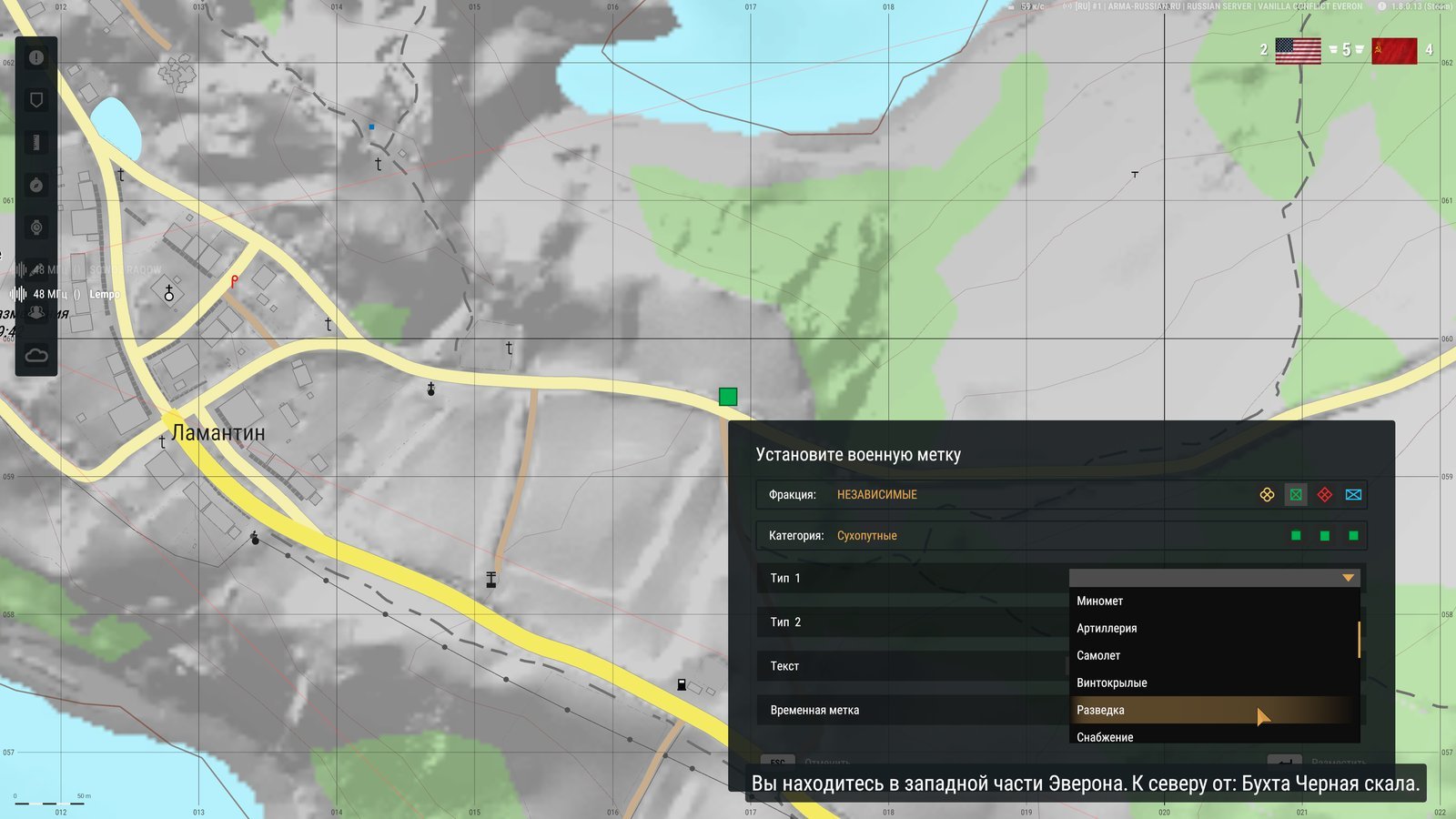
Миномёт
Mortar
NOMМиномёт · Dictionary миномёт (masc., "mortar"); Nominative singular. A noun rather than an adjective, like Самолёт and Пулемёт further down the list.
From ми́на, "mine, mortar bomb", and мета́ть, "to throw", so a mortar is literally a mine-thrower. The game prints Миномет without the ё, and the audio says -мёт, as the word is actually pronounced. The Squads page teaches the adjective миномётное.
Type Dropdown: Artillery to Supply
Unit Types
Артилле́рия
Artillery
NOMАртилле́рия · Dictionary артилле́рия (fem., "artillery"); A collective singular noun, nominative. Spelled with a double л, like the English word.
Самолёт
Aircraft (the game's English says Fixed Wing)
NOMСамолёт · Dictionary самолёт (masc., "aeroplane"); Nominative singular.
From сам, "self", and лёт, "flight". It is the everyday word for a plane, and here it stands for fixed-wing aircraft as a class. The game prints Самолет without the ё.
Винтокры́лые
Rotary-wing (the game's English says Rotary Wing)
NOMВинтокры́лые ("rotary-winged") · A plural adjective used as a noun, nominative plural; From винт, "screw, rotor", and крыло́, "wing".
A technical term. The game's own field manual says helicopters are also known as винтокры́лые лета́тельные аппара́ты, "rotary-wing flying machines", while вертолёт stays the everyday word.
From разве́дать, "to find out by scouting". The same word covers battlefield scouting and an intelligence service. It is also on the Arma Vocabulary page, with its full declension.
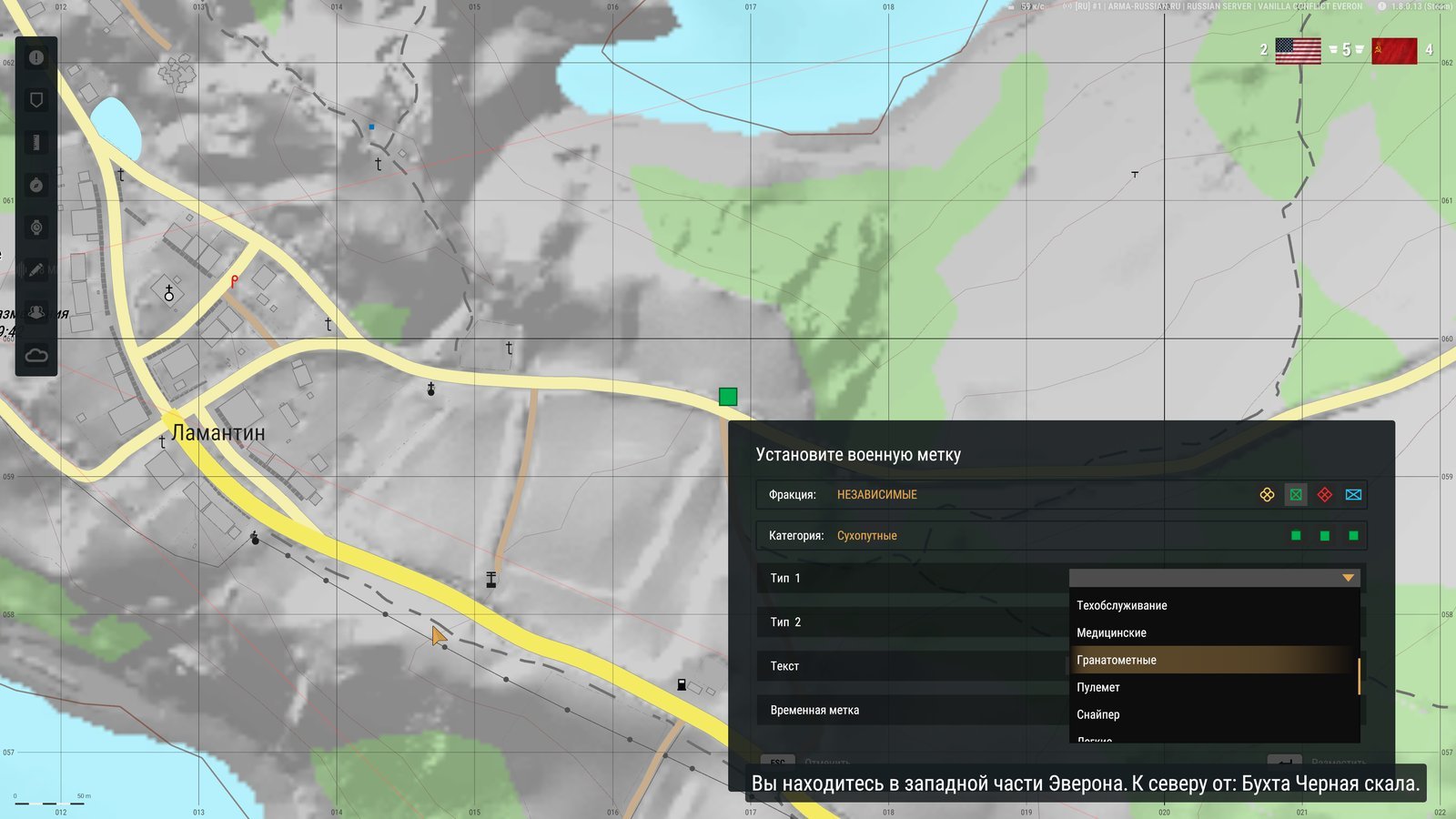
Снабже́ние
Supply
NOMСнабже́ние · Dictionary снабже́ние (neut., "supply, provisioning"); Nominative singular, a verbal noun from снабжа́ть, "to supply".
The Build: Structures page uses it in the genitive, in Склад снабже́ния, "supply depot".
A contraction of техни́ческое обслу́живание, "technical servicing", written as one word. Like мотопехо́та it is a full dictionary word, not a shortening, so it is read exactly as written. The Build: Structures page uses its genitive, техобслу́живания.
Медици́нские
Medical
NOMМедици́нские ("medical") · A plural adjective used as a noun, nominative plural; From медици́на, "medicine".
The Squads page teaches the neuter singular Медици́нское as a squad role.
Гранатомётные
Grenade launcher units (the game's English says Grenade)
NOMГранатомётные ("grenade-launcher") · A plural adjective used as a noun, nominative plural; From гранатомёт, "grenade launcher", itself грана́та, "grenade", plus мета́ть, "to throw".
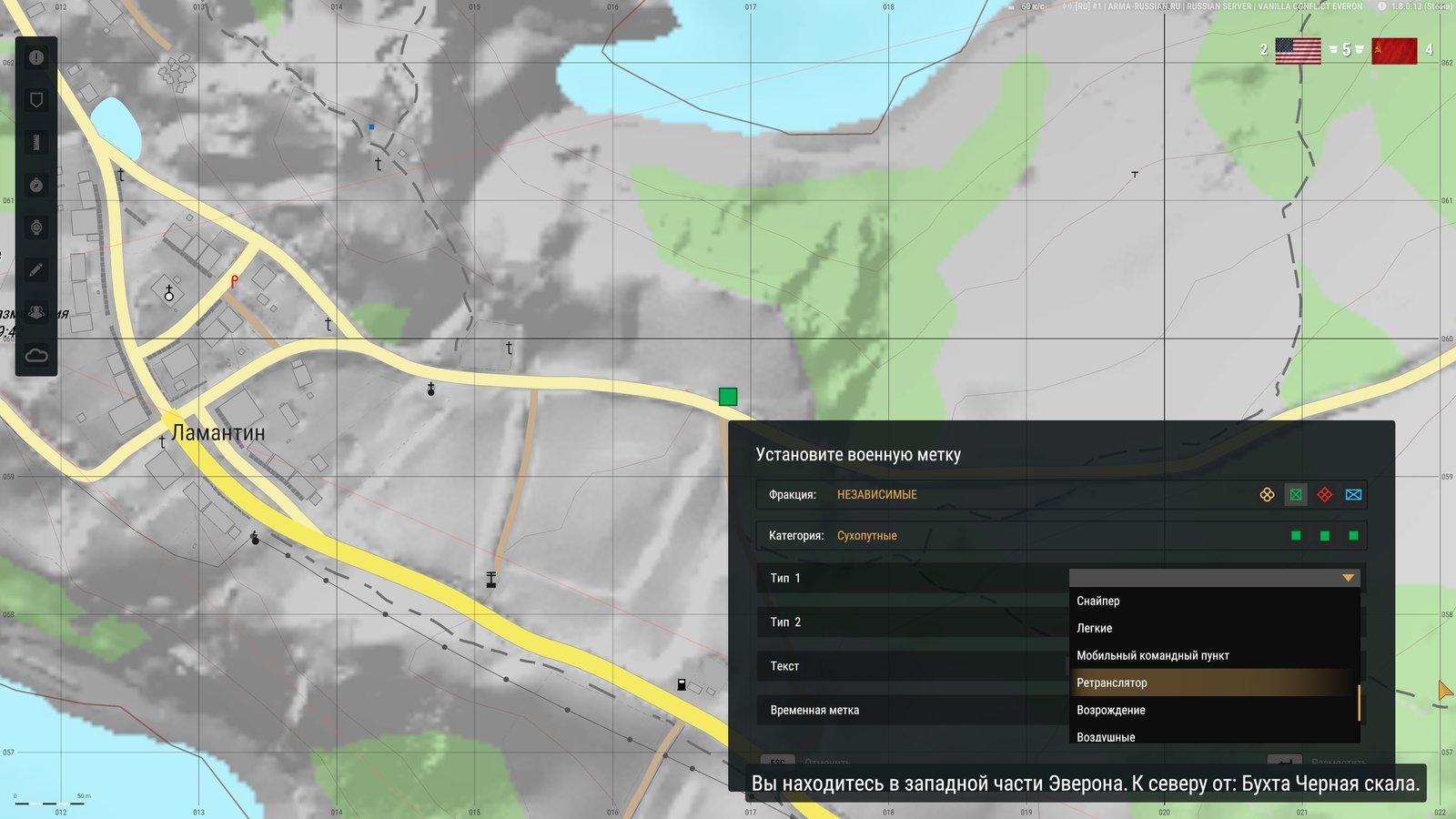
NOMЛёгкие ("light") · A plural adjective used as a noun, nominative plural; Dictionary лёгкий, "light, easy".
The г before к is pronounced х, so it sounds like лёхкие. The game prints Легкие without the ё. As a noun, the same word means "lungs".
Моби́льныйкома́ндныйпункт
Mobile command post (the game's English says Mobile Command Unit)
NOMпункт · Dictionary пункт (masc., "point, post, station"); Head noun, nominative singular. One syllable, so no stress mark.
NOMкома́ндный ("command") · Agrees with пункт, nominative masculine singular.
NOMМоби́льный ("mobile") · Agrees with пункт, nominative masculine singular.
In the game this is the post deployed from a command truck, which lets your side respawn near it and extends your radio range. The game's own verbs for it are разверну́ть, "to deploy", and сверну́ть, "to pack up".
From ре-, "re-", and трансли́ровать, "to broadcast". In the game it is a large signal tower that extends the radio network. The field manual notes that relays are not bases and give no respawn points.
The Menu References page teaches it as the respawn screen's title, and here it marks a respawn point on the map. Outside games it means a revival, and эпо́ха Возрожде́ния is the Russian name for the Renaissance.
Возду́шные
Airborne
NOMВозду́шные ("air, airborne") · A plural adjective used as a noun, nominative plural; From во́здух, "air".
In this list it means airborne troops, and the game's English says Airborne. The same word is also one of the three Катего́рия options, where its English is Air. Russia's airborne forces are more fully возду́шно-деса́нтные войска́, known by their initials as the ВДВ.
Type Dropdown: Amphibious to Combined Arms
Unit Types
Амфи́бия
Amphibious
NOMАмфи́бия · Dictionary амфи́бия (fem., "amphibian; amphibious vehicle"); Nominative singular. A noun, where the game's English uses an adjective.
Сигна́льные
Signal
NOMСигна́льные ("signal") · A plural adjective used as a noun, nominative plural; From сигна́л, "signal".
Elsewhere in the game the same adjective appears in сигна́льные раке́ты, "signal flares". The arm of the Russian military that runs communications is more usually called войска́ свя́зи.
Общевойсковы́е
Combined arms (the game's English says Combined)
NOMОбщевойсковы́е ("combined-arms") · A plural adjective used as a noun, nominative plural; From о́бщий, "general, common", and войска́, "troops".
Общевойсково́й describes a force built from several arms working together, as in общевойскова́я а́рмия, "a combined-arms army". It is the last option in the list.